Showing posts with label herbal concoction. Show all posts

Tuesday, August 16, 2011

Warrior Salve for Sore Muscles, Strains, Sprains, and Bruises

I've talked about it off and on here at the blog and often on twitter but as of a few weeks ago, my Warrior Salve for Sore Muscles, Strains, Sprains, and Bruises was finally made available in my Artfire Studio and in my Etsy shop!  This salve is perfect for athletes, weekend warriors, and everyone in between primarily for helping relieve sore muscles.


This is a recipe that I developed last year while I was training for the Susan G. Komen 3 Day for the Cure.  My training consisted of walking around 500 miles in preparation for the event where I walked 60 miles over the course of three days in order to raise awareness of the fight against breast cancer.  I had a lot of problems with my feet in training and know many walkers who had very, very sore muscles not to mention strains and sprains.  My Warrior Salve was inspired by these walkers that kept going no matter what, knowing that they were walking for something much bigger than themselves and their pain.


I asked some of my 3 Day walker friends to test out my Warrior Salve, knowing that I couldn't find a better group of people to really put it to the test and give me honest feedback.  The feedback was overwhelmingly positive.


-I LOVE this muscle salve! I've been able to use it on a few different types of muscle pain (e.g., tired muscles, sore muscles, and injured muscles) and found the salve to be effective on each type. Most pains were alleviated after one use while more severe injuries felt improvement over a couple days. And best of all...no stinky medicine smell! ~ Jami


-You need some of 's sore muscle salve. It's *amazing* and works on everything from torn ligaments to bruises. ~Pam


Pain relieving, anti-spasmodic organic herbs were infused in medicinal olive oil and blended with essential oils and beeswax to create this salve.   Just rub a little in where you feel sore (the rubbing is an added bonus of giving yourself a little massage) and wait for the herbs to work their magic.

Wednesday, August 10, 2011

Wordless Wednesday: Peppermint Lip Balm

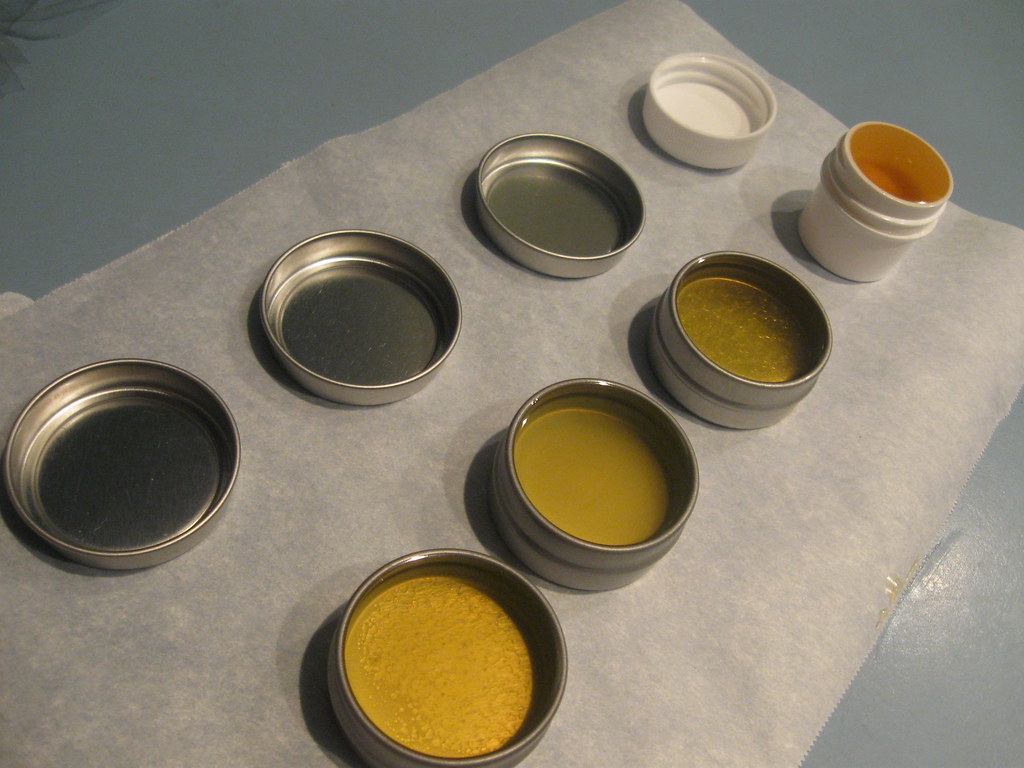
Peppermint Lip Balm

Just made a small batch of minty, moisturizing lip balm.  Once they cool and I get some labels put on them, they'll be in the shop!

Friday, June 10, 2011

30 Days of Creativity - Day 10 Herbal Concoction: Ginger Syrup

I haven't featured one of my herbal concoctions here in a while...

I love ginger.  Not only is it delicious, but it's also an amazingly beneficial herb.  Ginger is antibacterial, an antiviral, a circulatory stimulate, anti-inflammatory, diaphoretic, antispasmodic, antiemetic, antifungal, anti-clotting, carminative, antiarthritic, analgesic and antitussive.  Ginger is active against several food-borne pathogens, including E. coli, salmonella and shigella.  It helps us feel warm when we're chilled and will help prevent colds and flu.  It helps with coughs, is an expectorant, and helps with respiratory infections.  Ginger relieves pain, stimulates immune activity, reduces inflammation and stimulates sweating (which is how it helps with fever).  It's been known to help topically with burns as well as arthritis relief.  Internally it destroys parasites, stimulates white blood cells, aids digestions, helps with gas, and more.  I personally love to use ginger to prevent motion sickness.


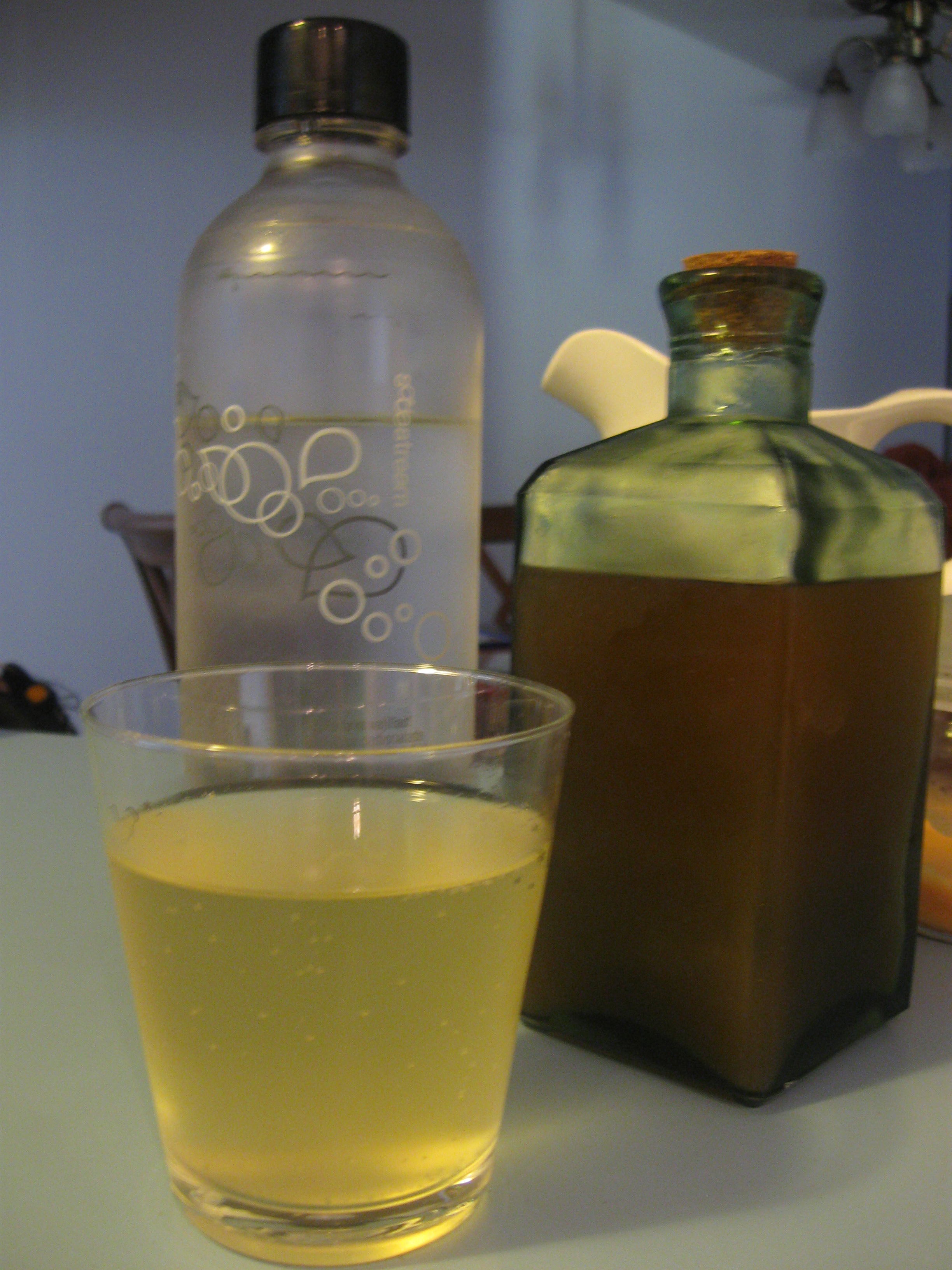
All of the amazing attributes of ginger aside, I simply love the taste and wanted to make my own ginger ale.  A while ago, I used a recipe from Aquarian Bath and loved it.  I decided to try something a little different this time. I have a soda maker from Sodastream, which is really just a system of getting carbonated water, and use it all the time.  You can buy syrups for it that taste like commercially sold sodas, are less expensive, and have lower calories.  My brainstorm was to make my own syrup!


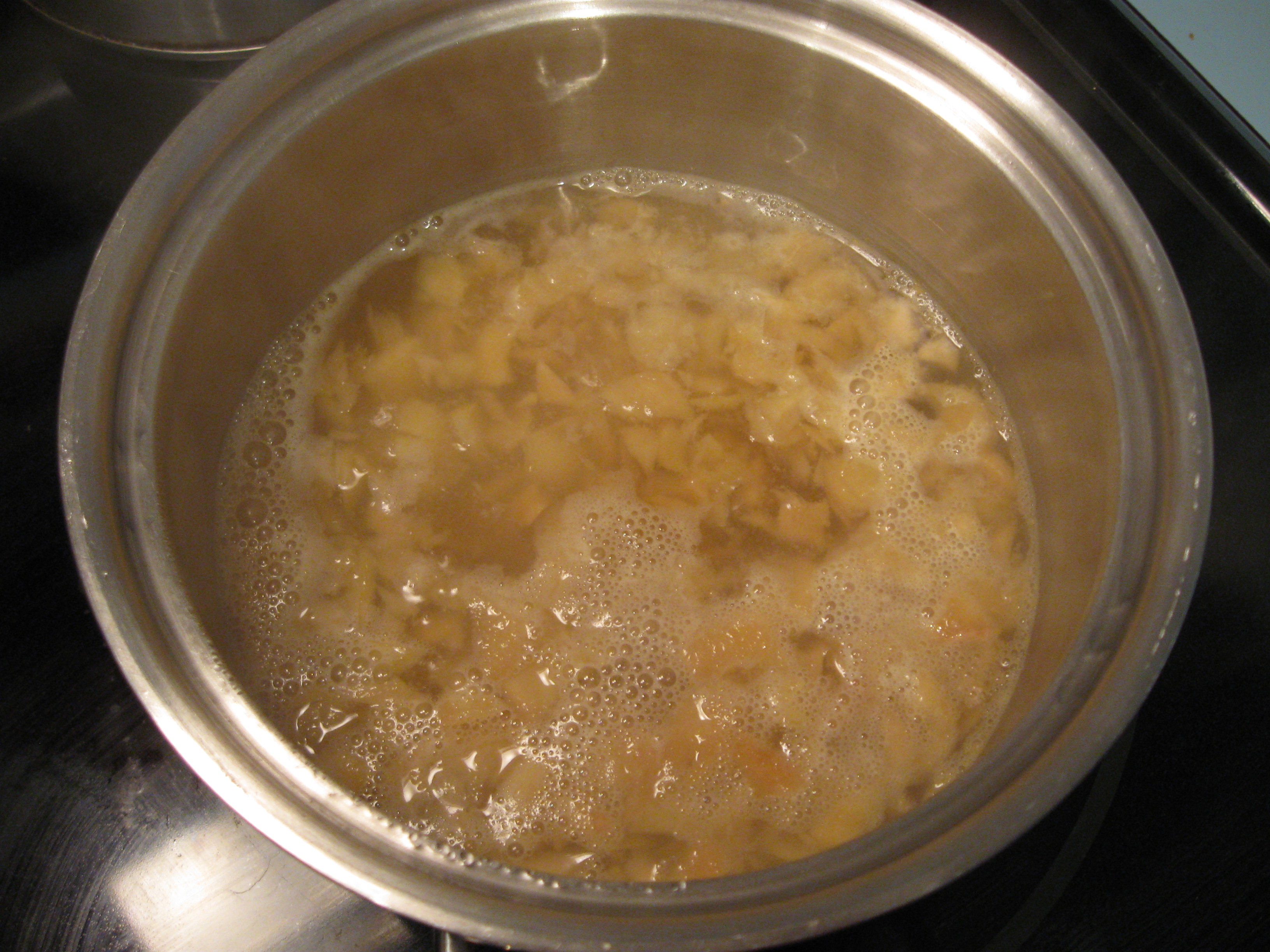
I decocted a cup of chopped ginger root in two cups of water and let it sit overnight.  
Ginger Decocting


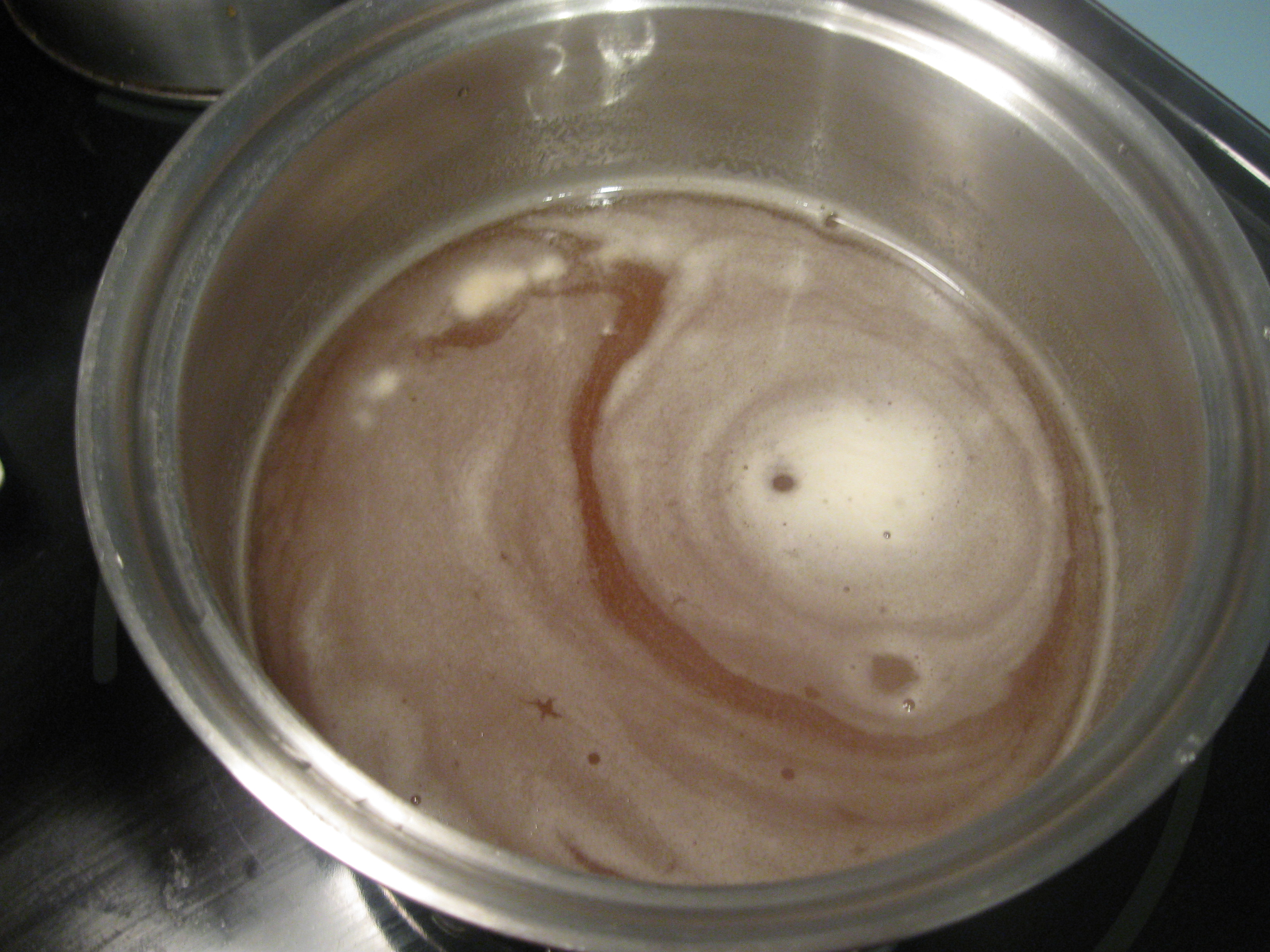
In the past, I've used sugar to make my syrups but I thought I'd give honey a go this time to increase the medicinal benefits of the syrup.  After straining the ginger decoction and returning it to the pot, I added a cup of honey and simmered for 5 minutes.  
Honey and Ginger Decoction Simmering


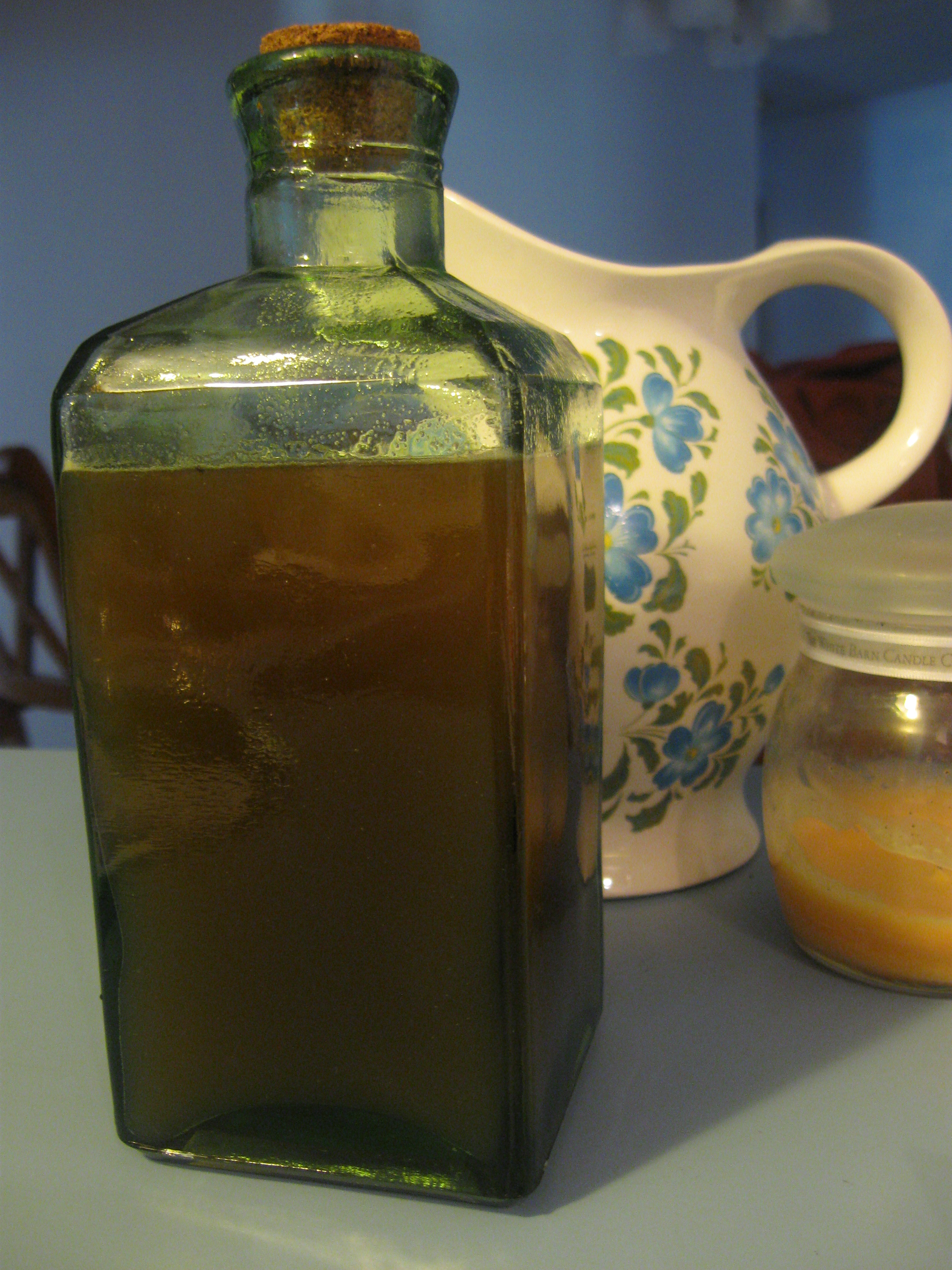
I let it cool and then put it in an air tight bottle and stored it in the fridge.  
Ginger Syrup


1-2 tablespoon of syrup per cup should be all you need; garnish with mint sprigs and/or lemon.  By the way, if you don't have a soda machine, just use club soda or seltzer.  Enjoy!
Ginger Ale

Monday, February 15, 2010

Herbal Concoction: Herbal Candy

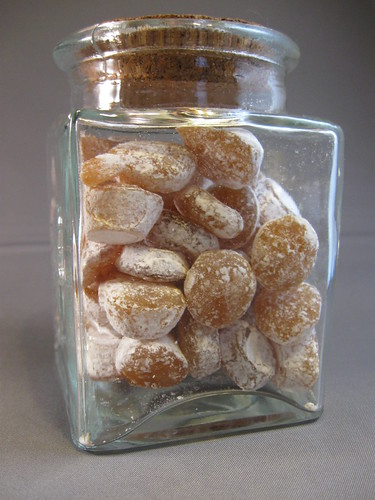
Yesterday was Valentine's Day and my human Valentine (Scott) was at work all day while my furry Valentine (Jack) slept much of the day. I spent the majority of the day doing research (aka: obsessing) about doing the Susan G. Komen 3 Day Breast Cancer Walk. I finally decided to get out of my head for a little bit and make some herbal candy. I had seen a recipe for it a couple of weeks ago and then my friend Cat over at The Green Cat blog sent me an e-mail with a link to a recipe on Instructables. It was the second time I saw that particular recipe that week. I figured that the universe was trying to tell me something so I had to try it.

Here is the recipe I used:


Cough Drops - More DIY How To Projects

I picked up some really delicious Ginger Lemon tea by Yogi Tea earlier in the week and thought that it would taste really yummy as candy so I used that instead of selecting my own herbs for this first try.

I also had to pick up a candy thermometer since my regular cooking thermometer doesn't reach the temperatures you need for candy. The instructable recipe made a point of saying to check your thermometer's temperature. I'm grateful I did, because it was off by about 20 degrees! I'm glad I knew to adjust it because it took a really long time to get it to the correct temperature.

One of the reasons why I decided to use this recipe for my first try making herbal candy is because it uses less than half the amount of sugar normally called for in a basic hard candy recipe. Apparently, you can play with what sweeteners you use but I stuck with the original recipe for this first try. I think next time, I'd like to try a combination of white sugar and agave, but I have a feeling that it might make for a chewy candy instead of the hard candy you get with straight sugar.

I didn't have any candy molds but I did have powdered sugar, so I used her recommendation to make molds using that. It was so cool watching the tea/sugar mixture flow into the molds. Seriously.

I stuck it in the fridge and let it set for about half an hour before I sifted the candy out.


I love that they are coated in the powdered sugar (tasty plus it helps keep them from sticking together) and if I do ever get candy molds still plan on using a light sprinkling. They turned out really tasty, but really sweet (but I guess that's simply in the nature of hard candy). I'm really glad that I used this recipe with less sugar!! They're very hard, definitely a sucking candy. It was a lot of fun making them and I'm really looking forward to playing with different herbs. Maybe next time I'll try elderberry & mint...

Wednesday, December 16, 2009

Herbal Concoction: Lavender Honey


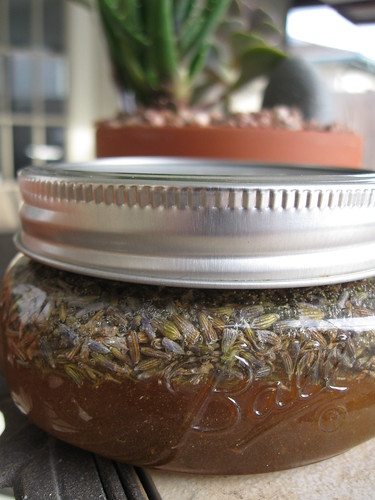
I love lavender. I love honey. Not only does lavender calm nerves, ease depression, and lift your spirits but it also smells and tastes amazing. When I found the video to make Lavender Honey through Mountain Rose Herb's YouTube channel, I knew I had to try it. I wanted to embed the video for you to watch it here, but it's not cooperating. Simply click on this link to be brought to the video directly on YouTube.

Wednesday, December 9, 2009

Herbal Concoction: Fire Cider


Fire cider is great to have on hand when you have sinus colds and congestion, but it certainly isn't for the faint of heart. The herbs used in the recipe are warming and stimulate the immune system. You can take a tablespoon straight, add to herbal tea, or even use it in soups and other cooking creations.

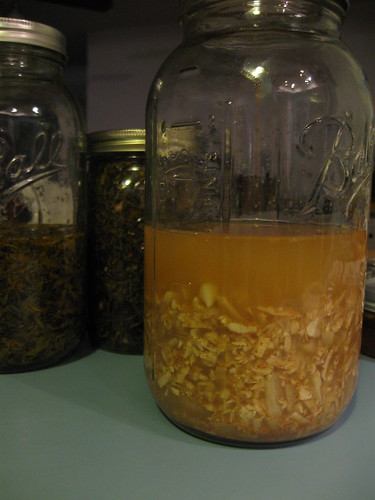
There are many different variations to the recipe attributed to many herbalists, but many people seem to associate the original recipe with Rosemary Gladstar. Since most of the herbs used are antibacterial and stimulate the circulatory system, some people use it as a tonic and drink small amounts daily in the fall and winter. Others use it at the first sign of a cold. Some folks let it steep for two weeks, others two to three months. This is the first time I'm making it, so I'm going to try steeping it for two months (seems like a good average) and see how it goes. I used traditional ingredients including: ginger, horseradish, garlic, onion and cayenne in a base of apple cider vinegar.

Basic Recipe
1/4-1/2 cup horseradish root, grated
1/8-1/4 cup garlic, chopped
1/2 cup onion, chopped
1/2 cup ginger, grated
1/2-1 whole fresh cayenne pepper OR 1 tsp dried cayenne powder
apple cider vinegar, preferably organic
honey, to taste

Place herbs in jar. Pour vinegar and cover herbs by one to two inches. Seal jar tightly and let steep desired amount of time (as I mentioned, I'm trying two months). Strain herbs and pour the filtered vinegar into a glass jar. Add honey to taste, if you'd like to sweeten it. Fire Cider may be kept unrefrigerated since vinegar is a natural preservative.

To Use
If you'd like to use it as a tonic, 1-2 tablespoons per day would work. Take 1-2 tablespoons at the first sign of a cold or upper respiratory infection and continue throughout the day (every 2 to 3 hours) until the symptoms subside. Drink it straight or dilute it in a bit or water or even tomato juice.

It can also be used as a base for salad dressings, a seasoning in soups, or even to flavor steamed veggies.

Externally, rub it directly on the skin or use as a compress for sore muscles or to aid in peripheral (hands and feet) circulation. You can also soak a clean cloth in it to be placed on a congested chest.

Some Beneficial Properties of the Herbs
Ginger aids in stomach issues including nausea and vomiting and sluggish digestion. It also stimulates circulation. Ginger is useful for all types of congestion in the body.

Horseradish has antibacterial properties and is of benefit in respiratory tract and urinary tract infections. It is also often used as a digestive agent. Horseradish is a good diuretic that promotes perspiration. It is also an expectorant and mildly antibiotic.

Garlic is an amazing antimicrobial and antibacterial making it useful in treating bladder and kidney infections, yeast infections, strep throats, and ear infections. It supports healthy immune function and opens the pores of the skin to lower a fever. It also lowers cholesterol and blood pressure, and has an overall beneficial effect on the cardiovascular system.

Cayenne is an intense circulatory stimulant, promotes the movement of mucous from the body, and is an anti-inflammatory.

In addition to just being tasty, onions are also antimicrobial, anti-inflammatory, and high in anti-oxidents.

**Please consult with an herbalist or your doctor before using Fire Cider if you are taking any medication with blood thinning properties.**

Monday, November 30, 2009

Herbal Concoction: Miracle Grains Facial Cleanser


The herbs for my Queen of Hungary's Water will be done extracting this week, so I thought I would make a cleanser to use with it. I've been buying handmade facial soaps for a long time, but I wanted to try something different. Enter Rosemary Gladstar's recipe for Miracle Grains. Cleansing grains are a mild, nourishing soap replacement that is suitable for all skin types. One of the things that I love so much about it is that it's completely biodegradable: it won't hurt the environment or leach toxic chemical into the water as some commercial cleansers do.

There are many variations that can be made to this basic formula; it practically begs for creativity. I decided that for my first batch, I would only use the basic formula to get a feel for it and then play with it after I see how my skin responds to it.

2 cups white clay
1 cup finely ground oats
1/4 cup finely ground almonds
1/8 cup finely ground lavender
1/8 cup poppy seeds or finely ground blue corn (optional)
1/8 cup finely ground roses

1. Combine all the ingredients. Store the grains next to the sink in a glass container or in spice jars with shaker tops. (I prefer the glass container with a well sealing lid to keep the moisture out.)

2. To use, mix 1 to 2 teaspoons of the cleansing grains with water. Stir into a paste and gently massage on the face. Rinse off with warm water.

Here's a tip: if you're going to be making a lot of your own homemade cosmetics, invest in a coffee grinder. I bought a cheapie one at Target for $15 and that's what I used to grind up the grains and herbs in this recipe. Just keep in mind, however, that you do want to leave some grit to them which is what serves as the cleansing "grains." *Don't use your regular everyday coffee grinder for this unless you want your herbal products to smell like coffee beans and your coffee to taste like roses and lavender.*

As soon as I made it, I realized that the glass jar that I picked up at Goodwill over the weekend would be the perfect container. And the shell that I found on the beach that I knew would make a perfect scoop actually measures a teaspoon. The whole project came together so beautifully!

Needless to say, I had to try it immediately. My skin has never felt so soft! My Queen of Hungary's water isn't ready yet, so I just used some witch hazel as my toner. It truly was a miraculous result, these miracle grains! I love how my slightly troublesome skin glowed after using it. These light grains gently cleanse, distribute excess oil, remove dead cells, and improve circulation.

I haven't tried it yet, but they can also be made moist for ease of use as well as the benefits of the additional ingredients.

1. Combine the dry Miracle Grains with enough honey and rose water (or plain distilled water) to form a paste.
2. Gently massage onto the face. Rinse off with warm water.

The honey serves as a natural preservative for the grains and also adds moisture. Rose water has light astringent properties. Only mix enough moist grains for a week or two to prevent spoilage, however. If the grains do spoil, it's because the ratio of honey to distilled water was off. The distilled water should simply give the mixture a smoother consistency; you don't need much.


This blog post is a part of the December blog party on the topic of Herbal Aesthetics hosted by Aquarian Bath. I love this topic and I'm really looking forward to reading all of the entries.

Wednesday, November 18, 2009

FL Herb Society Meeting: Herbal Vinegars

As of last night, I'm officially a member of the FL Herb Society. Really nice group of ladies, a topic I enjoy, and an excuse to get out and do something. Okay, I'm in. =)

At last night's meeting, we had an herbal vinegar hands on workshop. Beautiful bottles filled with fragrant herbs and some good quality vinegar equal a really pretty, easy to make project that will last throughout the year. Herbal vinegars are a simple way to add flavor to salads, soups, stews, marinades, beverages, and even desserts without added calories, fat, sugar, or salt.
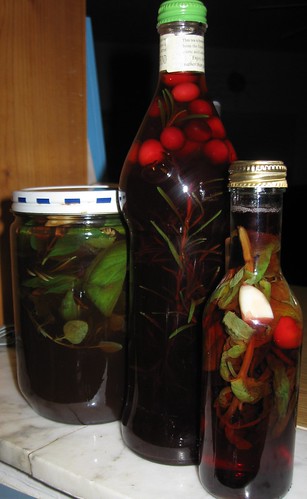

We were told to bring some herbs and bottles, but it turns out that they supplied an enormous amount of gorgeous, fresh herbs and some complimentary bottles (someone had a lot of those little wine bottles laying around!). There were a lot of amazing suggestions for herb & fruit combinations. I made two vinegars while I was there and another when I got home. Since I love Italian food, I made an Italian inspired vinegar while I was there (basil & garlic). I also used one of the suggested combinations of cranberry & rosemary because it just sounds amazing and looks so beautiful in the bottle. Since I had collected a bunch of my own herbs, I made one more vinegar when I got home with basil, rosemary, oregano, and garlic. I used red wine vinegar for all three.

A good rule of thumb is one cup of fresh herbs to flavor one quart of vinegar. Use a good quality vinegar between 6-8% acidity. Clean your herbs and pat dry. There are many recipes that call for heating your vinegar, but it's not necessary. Heating it will infuse it quicker, but the results of the slightly longer wait are supposedly more than worth it (it's my first try, so I don't know yet). Loosely fill your bottle with your herbs of choice and then fill with vinegar. Cap (you should probably use a cork or wax paper with a rubber band since the vinegar's acid will eat away metal) and store in a cool, dark, dry place for 4-6 weeks. When you are satisfied with the flavor, strain through white paper towels or coffee filters until the paper is clean (it may take several tries). Add some fresh herbs to a clean, sterile bottle, fill with the filtered vinegar, seal & label.

Fruit vinegars are made a bit differently. Combine all your ingredients (fruit and vinegar alike) in the top of a non-aluminum double boiler. Simmer, uncovered, approximately 10 minutes. Place in a large glass jar and store 3 weeks. Strain, pressing the fruit to get the juice out. Filter. Add a few berries, fruit, and herbs to your sterilized bottle and fill with your filtered vinegar. Seal and label.

Flavored vinegars will keep up to 18 months or longer if stored in proper containers in a cool, dark place. Some fruit sugars are likely to caramelize after a while and turn slightly brown. It's not attractive but it isn't harmful either. Use fruit vinegars within 3 months to avoid this. Vinegar is a natural preservative, so refrigeration is not necessary.

Cleanliness is essential. Be sure to wash all utensils, bottles, and equipment in hot, soapy water and then rinse in hot water. Always use non-reactive materials such as glass, plastic, or stainless steel.

If you are making some herbal or fruit vinegars for gifts this holiday season, dip your cork into hot wax, add a label, and write a recipe for its use on a small hang tag to tie around the neck of the bottle.

Of course, herbal vinegars can be used medicinally as well as culinary. Herbal vinegars are nutrient dense containing large amounts of calcium, the nutrients from the individual herbs used, and the healing properties of vinegar.

Tuesday, November 17, 2009

Herbal Concoction: The Queen of Hungary's Water

The skin is the largest organ of the human body. What many people don't think about is that what they spray and slather on their skin is, in fact, absorbed into their bodies. For this reason, I really started reading the labels of my personal care and body products a few years back. There were ingredients in there that I couldn't pronounce and that the European Union's version of the FDA won't allow into products due to their many harmful effects. I started to not only buy handmade, but also all natural and organic products as much as possible. In the past year or so, as I started to make my own household cleaning products, I also started to make some of my own personal care products (deodorant powder, lip balm) as well. I'm taking it a step further with my herbalism studies now.


I recently made a batch of The Queen of Hungary's Water. It has as many uses as it has variations, but my primary intent for this batch is to be used as an astringent (or toner). Astringents are used to remove excess oil, dirt, and cleanser from the skin. They tone the skin and help prepare it for moisturizing. While astringents are especially appropriate for oily skin, all types of skin can benefit from their pore-tightening effects.

Legend has it that Gypsies formulated The Queen of Hungary's Water and touted it as a cure-all using it as a hair rinse, mouthwash, headache remedy, aftershave, footbath, and I'm sure more. Another legend states that Elizabeth, Queen of Hungary originated this as a perfume to either preserve her youth or catch a husband, depending on which version you read.

This is one of the world's finest cosmetic formulas. It combines gentle common herbs in a masterful way, it's easy to make, and it's a versatile formula that serves many purposes. Not only can it be used as an astringent, but it can also be used as a rinse for dark hair; or as an ingredient in deodorants, herbal baths, lotions. The Vinegar of the Four Thieves is a variation of The Queen of Hungary's Water and can be used as a disinfectant.

Here is the formula I used from Rosemary Gladstar.

6 parts lemon balm
4 parts chamomile
4 parts roses
3 parts calendula
3 parts comfrey leaf
1 part lemon peel
1 part rosemary
1 part sage
vinegar to cover (apple cider or wine vinegar)
rose water or witch hazel extract
essential oil of lavender or rose (optional)

1. Place the herbs in a widemouthed jar. Fill the jar with enough vinegar that it rises an inch or two above the herb mixture. Cover tightly and let it sit in a warm spot for 2 to 3 weeks.

2. Strain out the herbs. To each cup of herbal vinegar, add 2/3 to 1 cup of rose water or witch hazel. Add a drop or two of essential oil, if desired. Rebottle. This product does not need to be refrigerated and will keep indefinitely.


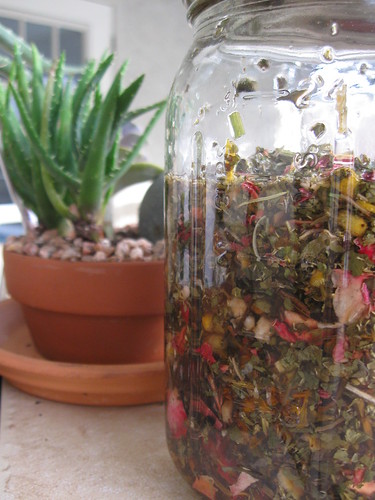
After the photo above was taken, I added more vinegar for it to rise the full inch or two above the herbs (the jar was full). You can see in this picture all of the beautiful colors of the herbs. Well, it's been infusing for a little more than a week and you can actually see the vinegar taking on the properties of those herbs. The vinegar is turning a gorgeous deep rose. I'm going to let it work it's magic for the full three weeks. I can't wait to try it.

Wednesday, November 4, 2009

Herbal Concoction: Brain Tonic Tincture


Among the many gorgeous, incredibly fresh herbs I received from Mountain Rose Herbs I got the ingredients I needed to make a Brain Tonic Tincture. This tincture is excellent for calming and strengthening the nervous system and increasing memory. You won't wake up overnight feeling like Einstein, but after consistent use (daily for anywhere between one to three months) there will be a subtle but noticeable increase in memory and mental alertness. I figured since I'm studying herbalism, this would be a great introductory tincture for me!

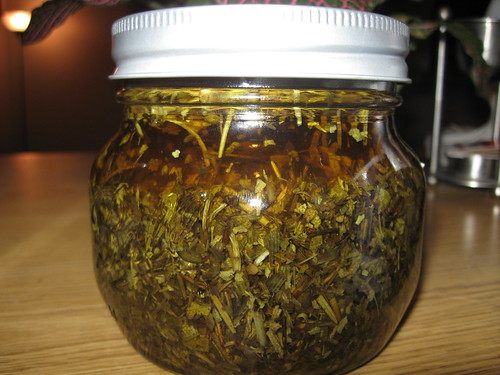
Herbs included in this tincture include: Gota Kola, Gingko Leaf, Peppermint, Sage, and Rosemary. The herbs are being extracted in vodka for six to eight weeks. You can see in the picture above how the herbs settle to the bottom of the jar: a simple shake daily keeps the herbs and vodka mixed.

People say that I must be very patient for making chain maille. Making maille doesn't need patience, but working with herbs does! It takes time for them to work their magic.

Tuesday, October 27, 2009

Herbal Concoction: Nerve Tonic

I've been feeling the stress of work creeping back into my heart and soul lately. Admittedly, nothing in particular has happened it's just the life sucking ability that place has over me when I let it (which is more often than I care to admit). I received my herbs last week and hadn't done anything with them yet. As a little pick me up, I decided that needed to change. On my way home from work yesterday, I picked up some supplies that I need to start playing and experimenting this week. I still need to get some mason jars and jars to put final products in as well as some tincture bottles, but I think I have enough stuff to at least get started.

My first lesson with Rosemary Gladstar focuses on the Nervous System and since work is stressing me out, I thought an appropriate concoction would be to brew my first Nerve Tonic Infusion. The herbs in it provide nutrients that help strengthen and support the nervous system. Unlike allopathic medicine which usually works fairly quickly (by deadening nerve response), natural therapies take time and consistency is key. When used over an extended period of time, nerve tonics can rebuild the nerve connections and create a lasting flow of energy. In essence, herbal nervine therapy increases our ability to cope with the stress of daily life. Just what I need.


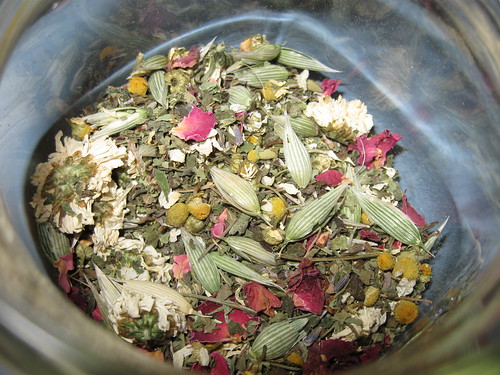
The Nerve Tonic that I decided to make includes lemon balm, chamomile, oats, chrysanthemum flowers, rose petals, and lavender flowers. I must admit, I was was in awe of how incredibly beautiful the herbs looked all mixed together. They have a sweet, floral smell. Steeping time can vary for an infusion anywhere between ten minutes and an hour. Since this is a medicinal infusion, I tried 30 minutes. It's a very soothing flavor that I think I enjoy without the need to add stevia (yes, it's an herb) to sweeten it. Next time I try it, I may let it steep for a bit longer to see how it effects the herbs and changes the flavor. Since this formula needs to be taken over time, it's actually easier to make it in batches instead of a cup at a time. I'm going to play with steeping time first and then make a day's worth at a time.

Most natural therapies for nervous system disorders are based on nutrition, herbs, exercise, and a reevaluation of lifestyle. I already do eat fairly healthy and drinking this fortifying tea will only benefit me. Unfortunately, working out has fallen by the wayside lately and that needs to change. I've also let myself get complacent about things that I love doing: namely being in nature and making my maille. It's hard to care about anything after having your life force sucked out of you for eight hours at a time, but again: that needs to change. On a side note: I've been having problems sleeping lately. I don't know if this tonic did it or just my feelings of happiness (or exhaustion?) when I went to bed, but I slept very well last night. Happy.